












FIDDLER ON THE ROOF
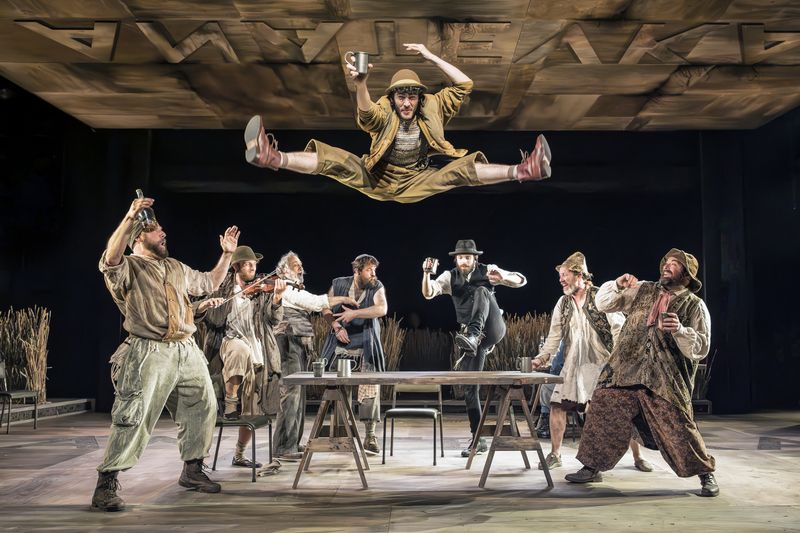
Photo: Johan Persson
The merest mention of the name of this classic and much loved piece of musical theatre almost always initiates the same response, the immediate burst into one song, the comedy number that comes very close to the start of the show. Yes it’s If I Were A Rich Man. And of course that did become the best know of all the songs, closely followed by Matchmaker. Both of them brilliant and memorable, and in isolation you could be tricked into thinking that you are in for a jolly Jewish romp of an evening. And in part you are, Tevye is a charmingly comic creation based on “Tevye the Dairyman” and other short stories by Sholem Aleichem. Tevye is the milkman in the village of Anatevka with a wife and four daughters to support. They are a poor family living in an impoverished world where difference in faith is fast becoming an issue, the Russian Empire at that time allowed Jewish settlements but things are fast changing and antisemitism is rearing its ugly head. Does this all sound too familiar? Not just the horrors of WWII but current wars where faith and prejudice lie at the root of bloody conflict.
Tevye is a warm character, a man attempting to maintain Jewish traditions as the world around him changes. He is comic but his struggles are real, finding husbands for his three eldest daughters and putting food on the table for his whole family.
The opening number, Tradition, sets the scene but from that point we see how societal changes at the start of the 20th century are beginning to emerge. The seeds of female emancipation have been sown, the daughters want to marry for love, the matchmaker is a thing of the past and even the village Rabbi is somewhat ineffectual. And the local constable, whilst initially is seen as a reasonable and unprejudiced man, eventually falls under the pressure of the Russian authorities.
I may at this point be painting a picture of a rather dark evening of theatre, and certainly the underlying story here is dark and at this point in our history all to poignant and familiar. But it is equally important to see that, in the right hands, this brilliant piece of theatre is totally entertaining and very enjoyable indeed.
And this production which comes from Regents Park Open Air Theatre via The Barbican has been created by an incredible creative team and impeccable cast making it both entertaining and thought provoking. Director Jordan Fein captures every nuance needed with a delicate touch, the balance of humour and humanity in the face of religious oppression is tangible throughout. Tom Scutt’s design is strikingly beautiful and beautifully lit by Aideen Malone. Julia Cheng’s choreography creates real magic, a balance of traditional dance forms, rustic in moments, formal in others and above all exacting and exciting, and the company, and in particular the men, deliver it with vibrant energy.

Photo: Johan Persson
Throughout the show there is an ever present and haunting fiddler, a virtuosic player and eerie presence who lopes and swaggers around and above the stage. It’s a stellar performance by violinist Roman Lytwyniw that as a common thread holds the whole together.
Tevye’s wife Golda is played by Jodie Jacobs, a world weary woman striving to do her best when the odds are stacked against her. Jacobs has the most beautiful voice but also inhabits the role with a power that does not rely on cliche.
All four of the daughters have youthful charm, three on the edge of maturity, one still girlish but all recognising change that will impact their lives and the lives of their mother and father as they struggle to accept that change. Vocally all four have finesse but it is in their ensemble singing that they triumph. That in fact is true of the entire company, the quality of the singing and of the orchestra, who deliver that kletzmer sound in combination with lush traditional musical intonation so beautifully… well musically the production is second to none.
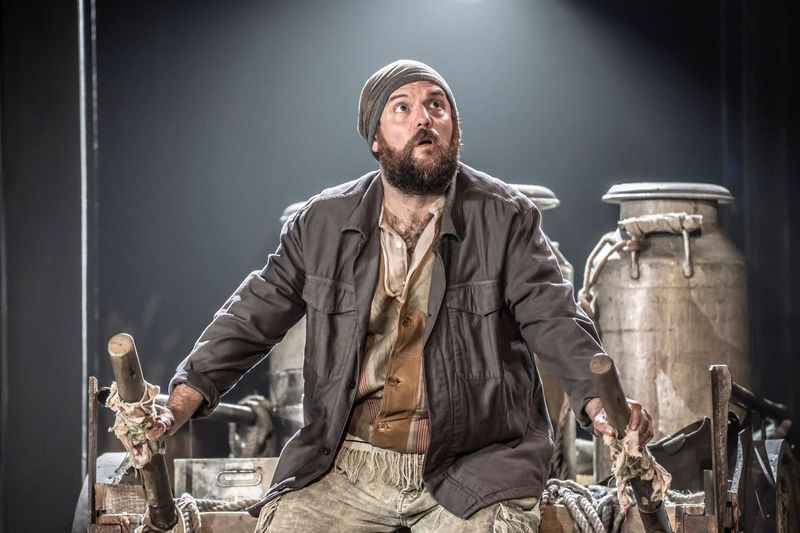
Photo: Johan Persson
Finally to Tevye, a role so firmly imprinted on the memory from the 1971 movie. Here Matthew Woodyatt makes it his own and he is excellent, the richness of a fine voice matched by the ability to be both comic and emotionally real. As the core around which the tale is wrought he reflects the changes that surround him with clarity, despair and of course resignation.
This work of musical theatre is perhaps one of the most important works of the 20th century, and one that will no doubt live on, especially as globally we seem to be unable to learn the lessons of religious intolerance and prejudice that it so clearly explains.
There is no place for war based on difference in faith and yet here we are in a world dived in bloody conflict. But there will always be a place for Stein, Bock and Harnick’s masterpiece and especially when delivered by a company as excellent as this.
Andrew Kay
4 November
Congress Theatre Eastbourne
Rating:



Leave a Reply