












GLYNDEBOURNE CHRISTMAS CONCERT
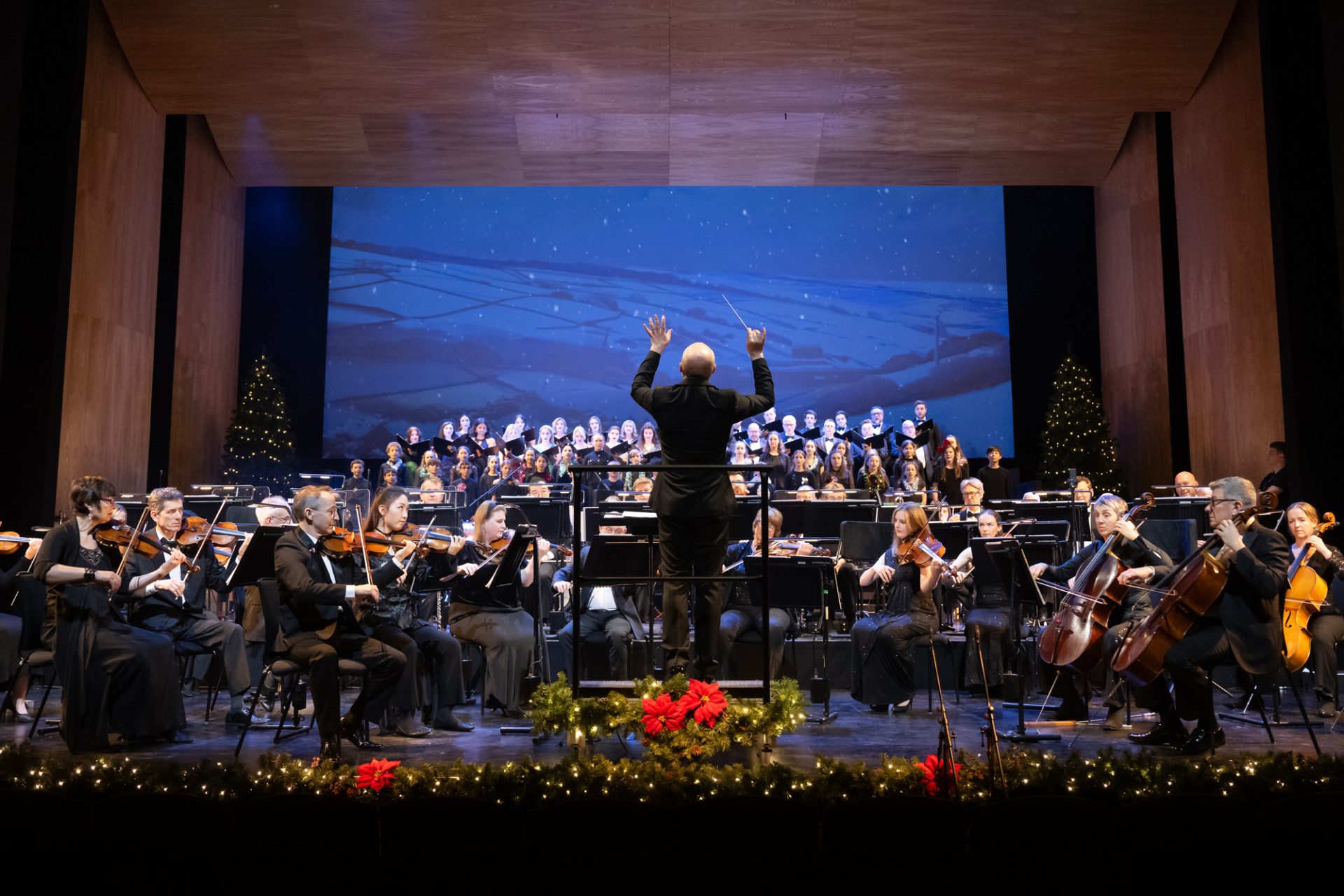
The jewel in the crown of the Sussex music scene, and way beyond, always deliver the most delicious feast as a seasonal treat and this year was no exception. It is a delightful affair, not just for the music, important as that is, but in my view for one really important thing. In a world where the teaching of arts and in particular music, in our schools, has been savagely and shamelessly diminished by successive governments, how wonderful it is to see so many families taking along young children to enjoy music, in a variety of forms, delivered with class.
Glyndebourne’s commitment to education is extraordinary and in particular the youth opera where young people with musical talent from 9 to 19 can join in, learn and enjoy, some even progressing to the Glyndebourne Chorus in time.
The event as usual is hosted and conducted by the talented and charismatic Aidan Oliver. Year on year Oliver has proved his worth not only as chorus master and conductor but also as entertainer. If only more conductors engaged with audiences in the way that he does. His well measured interjections are not only illuminating but poignantly witty and genuinely amusing.
The concert is a well judged balance of music with part one being perhaps more serious in content, but not heavy in any sense.
Opening with Mikhail Glinka’s Ruslan and Lyudmila Overture soon had us in the mood and Mozart’s Gloria from his Mass in C major, K.317 was superbly delivered with soloists Faryl Smith Soprano, Rhiain Taylor Mezzo-Soprano, Dominic Morgan Tenor and John Mackenzie-Lavansch Baritone soaring about the Glyndebourne Chorus and Sinfonia.
I am a lover of the works of Donizetti and the Bridal Chorus from Lucia di Lammermoor certainly delivered only to be followed by baritone Hector Bloggs with a delightfully characterful Come Paride vezzoso from L’elisir d’amore.
The Moon Chorus from Otto Nicolai’s Merry Wives of Windsor was an unfamiliar treat followed by the rousing and crown pleasing Anvil Chorus from Il Trovatore and the gentle delight of the Intermezzo from Mascagni’s Cavalleria Rusticana.
Next we had tenor Liam Forrest whose delivery of Recondita armonia from Puccini’s Tosca powerfully announced that it would be part of the 2026 festival season. Part one closed the Rossini’s William Tell overture, a well love work that for people of my generation cannot fail to remind one of childhood cowboy The Lone Ranger and with that it was high ho… and into the interval.
Part two is the lighter part of the programme but no less exciting. Sergei Prokofiev’s
Symphony No.1 in D major, gets everyone in the mood before the first audience Carol, It Came Upon the Midnight Clear. To follow Libby Larsen’s Ring the Bells was a delightful new carol and the moment that the youth opera came properly into play. Claude Debussy’s Noël des enfants qui n’ont plus de maison arranged by Henry George D’Hoedt saw them at their very best, a disquieting text, beautifully sung and given the lyric content so moving.
Lucy Armstrong’s Christmas Magic next followed by the chance to sing joy To The World. Then John Rutter’s The Colours Of Christmas, as Oliver said, what Christmas concert would not be complete without a bit of Rutter!
Then in sharp contrast the jolly romp of Christmas on the Beach at Waikiki, the young singers have such fun.
Oliver then introduced us to Hans Christian Lumbye, the Strauss of the North he informed us, and how right he was. Copenhagen Steam Railway Galop and his Champagne Galop put smiles on faces for sure. Hark! The Herald Angels Sing for us next before the epic work of John Williams for Star Wars. And what better to round things off with It’s the Most Wonderful Time of the Year, proving that, at Glyndebourne, it is just that!
Andrew Kay
7 December
Glyndebourne
Rating:



Leave a Reply