












Interview: Gathering Mosse
Victoria Nangle talks to bestselling novelist and Chichester resident Kate Mosse about her new novel, and loving Sussex
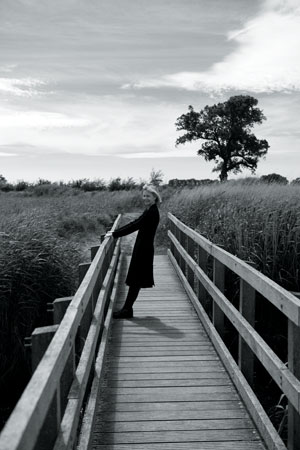
How are you today?
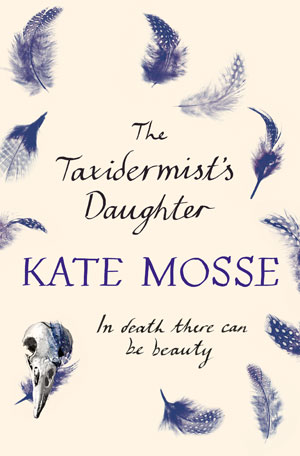
Jumping up and down for joy! The first copies of The Taxidermist’s Daughter have just arrived and they’re beautiful: fabulous jacket, glitter and sparkle, very stroke-able and wonderful creepy blue endpapers. Holding the first copy in your hands is always, even after all these years, such a thrill.
Your new novel, The Taxidermist’s Daughter, is said to be going in a new gothic thriller direction. What prompted this?
This is the closest thing to a thriller I’ve written, both a whodunnit and a whydunnit. I’m a big fan of Gothic fiction – from Daphne du Maurier right back to The Castle of Otranto – and I always have a touch of dark secrets and creepy goings-on in my novels anyway. I love writing menacing scenes, stories of dark secrets, with the storm and the flocks of sinister black birds in the distance. Oh, and this time, taxidermy too, and a deserted house threatened by the impending floods.
You’re known for researching and painting scenes throughout history in your fiction. When have you settled in this time, and why?
The Taxidermist’s Daughter is set in England over four days in the summer of 1912 (which was, until 2012, the wettest summer on record). I loved the idea of the threat of the story, of consequences of a terrible act ten years in the past coming back to haunt the present, the dark secrets of the abandoned taxidermy museum being set against the backdrop of the tides rising higher and higher and higher … The West Sussex Record Office in Chichester was brilliant helping me with research into the landscape and history of the time and I must have read most of the back copies of the Chichester Observer cover to cover.
Also, with The Taxidermist’s Daughter, I was fascinated by the idea that, as 21st Century readers, we know that the First World War is about to change everything for good but my characters in 1912 have no inkling of this at all. I wanted to capture the sense of an old fashioned community shocked to the core by a series of grisly murders, but give the reader the sense of poignancy, because we know what is to come will be so much worse.
People are frequently compelled to be fascinated by the grotesque, as well as the supernatural. Why do you think that is?
I think we scare ourselves in order to test ourselves. It’s what Edith Wharton calls ‘the thrill of the shudder’. We like to be frightened, we like to read about the deepest and darkest stories, we like to get our adrenaline pumping on the pages of a book, because we can always stop reading, we can always shut the book and move away. Taxidermy itself is both beautiful, and challenging. I admire the skill of it, the precision and elegance of it, at the same time as knowing that the idea of telling stories through stuffed birds and animals is really odd!
What is the scariest book you’ve ever read?
Everything, and anything, by Daphne du Maurier – her short stories and novels are extraordinary and super scary: so, The Birds, The Parasites, The Doll and, of course, Don’t Look Now. I adore Edgar Allan Poe and the Edwardian ghost stories of Algernon Blackwood, Edgar Edith Wharton and M R James. In modern writing, both Stephen King and Joanna Briscoe are terrific at scaring their readers witless…
You’ve set The Taxidermist’s Daughter in Sussex, where you grew up. Is there any kind of an autobiographical note here, on a subliminal level, at all?
There’s an element of autobiography in the inspiration for the novel but the story itself and the characters are completely imagined – for me, it’s emotion and place that matters in getting under the skin of a story. My leading ladies are very unlike me – they are solitary, calm, quiet and thoughtful young women… whereas I am very sociable, enjoy company and chat!
“My leading ladies are very unlike me”
You seem to still be in love with your home county, in your involvement with the Chichester Festival Theatre, Consort of Twelve, The Fishbourne Centre and countless other local organisations. What is it about Sussex that is so enamouring?
It’s home. I’m the person I am because I grew up – and live – in this particular, wonderful corner of the world, Chichester. I went away to University, then to live in London but, in the end, the tug of the Sussex Downs, the sea and the people drew me back. We have everything here: big skies, hills, the sea (both estuary and beaches), an international award winning theatre and art gallery, a great sense of history and a magnificent cathedral.
How do you use social media, as an author? (Your readers enjoyed the book launch pictures on Twitter this year.)
I’m new to Twitter – I started this year – but I have discovered the joy of having immediate feedback and conversation with readers, and fellow writers. I have friends – not least of all Mary Beard – who have suffered a great deal of unpleasantness, but my experience so far has been benign. For me, a book is finished by the reader – it comes properly to life when someone picks it up and opens to the first page. The Taxidermist’s Daughter is my first Twitter fiction campaign and, so far, so good…
What advice would you give to the countless aspiring authors hoping to follow in your footsteps?
Write, write, write! Five minutes writing a day is better than no minutes. Be disciplined, don’t lose heart, and you will soon find that the one sentence has become two, the two sentences a paragraph, then a chapter.
Oh, and read, read, read. You can’t be a good writer, one with her or his own voice and a story to tell, unless you are also a good reader. We all learn as much (as writers) from books we don’t enjoy, as from those we do.
Is there a piece of your own history you’d like to be able to edit?
I wish I’d stuck with those tap dancing classes when I was 12! I’m 52 now and still regret the fact that I never learnt to heel-toe, heel-toe…
Thank you very much indeed. Have a great day.
My pleasure. You too and I hope you enjoy The Taxidermist’s Daughter. I had such fun writing it, so want everyone to enjoy reading it as much.
Kate Mosse will be discussing her new book The Taxidermist’s Daughter (£16.99, Orion), and finding inspiration in her native Sussex, at Chichester Festival Theatre on Sunday 7 October. Tickets are £5, including a glass of wine, and available from Chichester Festival Theatre bookings website:
http://cft.org.uk/kate-mosse-presents-the-taxidermists-daughter



Leave a Reply