












A SMALL AND QUIET LIGHT
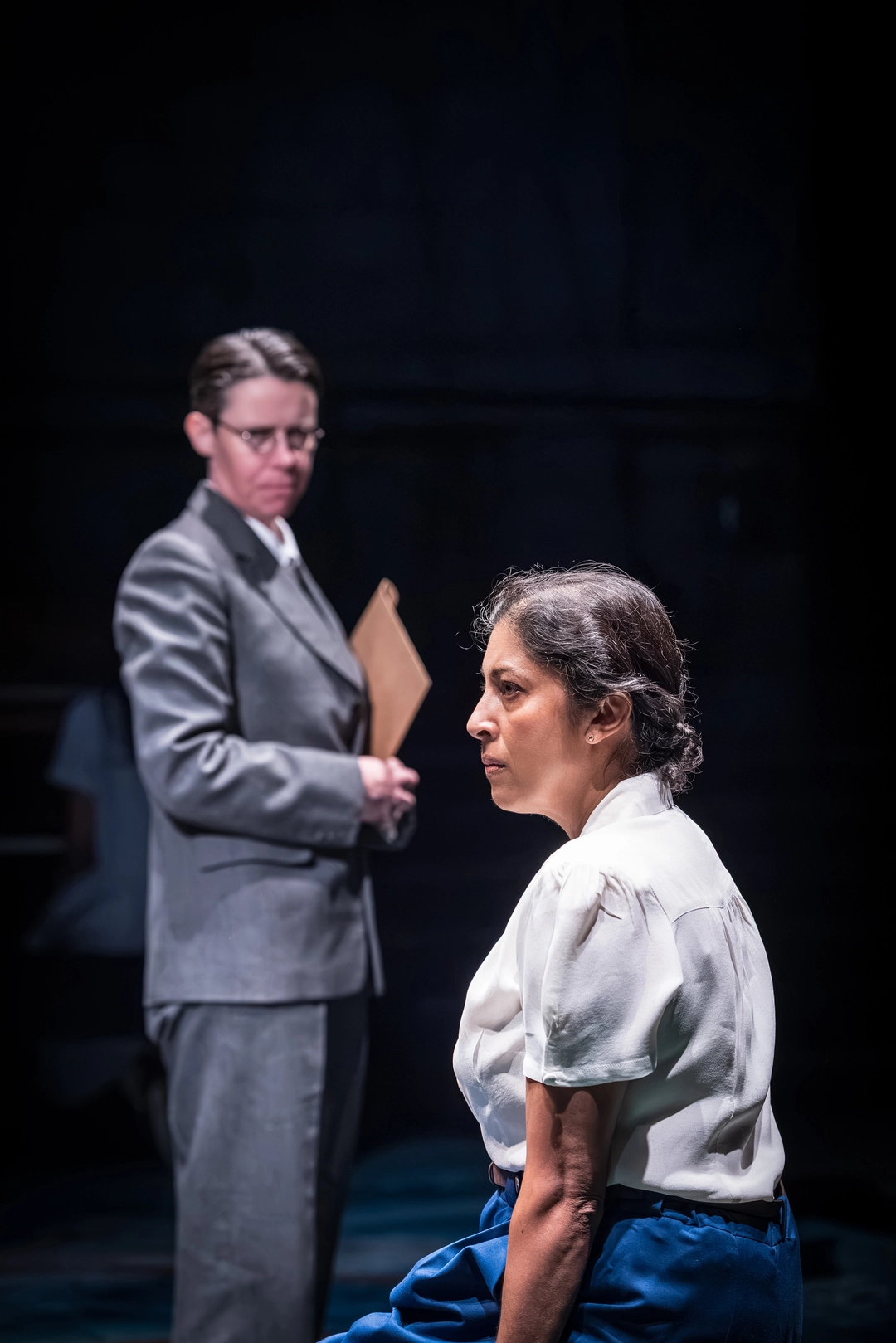
Photos: Marc Brenner
Chichester Festival Theatre continues it’s 2026 summer season with a new play by Stephanie Street that moved me to tears and had me rushing home to find out more. It charts the extraordinary life of an extraordinary woman, a woman I had never heard of but one I immediately felt the need to find out more. Noor-un-Nisa Inayat Khan’s background was complex, born in Moscow her family moved around extensively, she was an academic, a musician, a poet and a writer of children’s stories, and finally an Indian Princess.. A list of achievements like that would be enough to satisfy most, but not this woman, driven as she was to do something of value in the fight to conquer the Nazis and end World War II she joined the WAAF and trained as a radio operator eventually becoming the first woman radio operator sent into occupied France to help the French Resistance.
This is a fascinating piece of history and Street’s play manages to not only explore this heroic story but also explore what made this fascinating woman go to the lengths that she did. Managing to avoid capture for some time she is eventually betrayed and arrested and delivered to a Nazi interrogator, Ernest Vogt, whose job it is to find as much as he can from her about her resistance contacts and this forms fifty percent of the play. The cold severity of Vogt develops into a fascinating bond that despite being on opposing sides of the global conflict becomes a strange friendship based on respect.
Interspersing the scenes of interrogation the company, taking on multiple roles, deliver her history in scenes of family and military life leading up to her deployment in the field and eventual capture. Seven actors in total and all women take on the wide range of characters required to fill out the history in a display of gender blind performance that is spell-binding. Each and every member of this talented company is compellingly believable as they switch and change, and all this is done with minimal changes of costume relying on incredible dramatic skill and seamlessly smart direction from Elin Schofield. The whole is stripped back and devoid of clutter, a simple platform, five piano stools from which occasional props appear, an upright piano, a brown suitcase in which her radio equipment is stored and a notebook. Seldom does such sparse staging achieve such richness. Designer Anna Yates delivers a set that in its simplicity works so unobtrusively well and Ryan Joseph Stafford’s lighting is the perfect compliment to the vision, delicately refined for the most part but with moments of real magic.
The musical thread throughout is wound around Debussy’s Clare de Lune which is hauntingly picked out on the upright by various members of the company and developed into a soundscape by composer Nicola T. Chang in a way that colours the whole with subtlety.
The company of women take on roles that switch between family member, friends, British officers, French resistance workers and Nazis, Kiah Arya, Paksie Vernon, Léa des Garets, Tripti Tripuraneni and Amanda Hadingue are equally impressive and accomplished as they move from character to character, from place to place and time to time and all with minimal fuss and minimal bisiness, there is real physicality but without that so often over-used device known as “physical theatre”, and it’s all the better for it, the whole moving forward with pace when needed and calm when not.
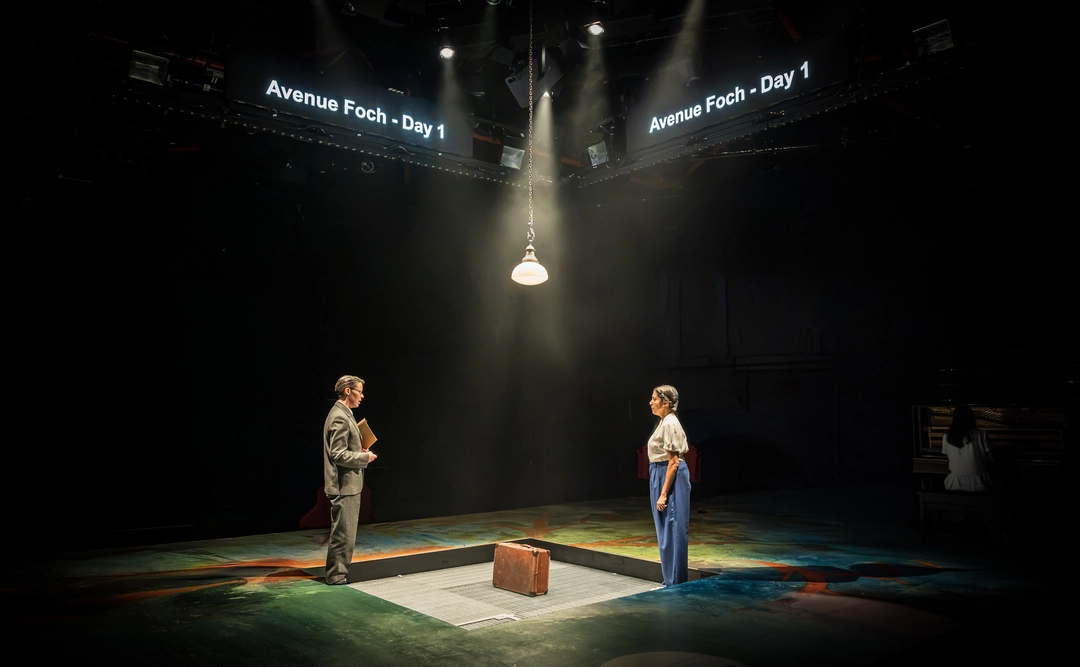
And calm is really the key to those two central performances from Priyanga Burford as Nora/Madelaine/Noor and Caoilfhionn Dunne as Vogt. From that almost constant still calm builds a strange bond of respect that teeters on the edge of friendship. Vogt’s methods do not employ physical torture but gentle if occasionally frustrated verbal manipulation. Clearly he is frustrated by her will power and dogged determination not to reveal names, and at the same time he is fascinated by this incredible woman and what is an act of pure heroism. Two stunning performances from two truly great actors delivering Street’s excellent play.
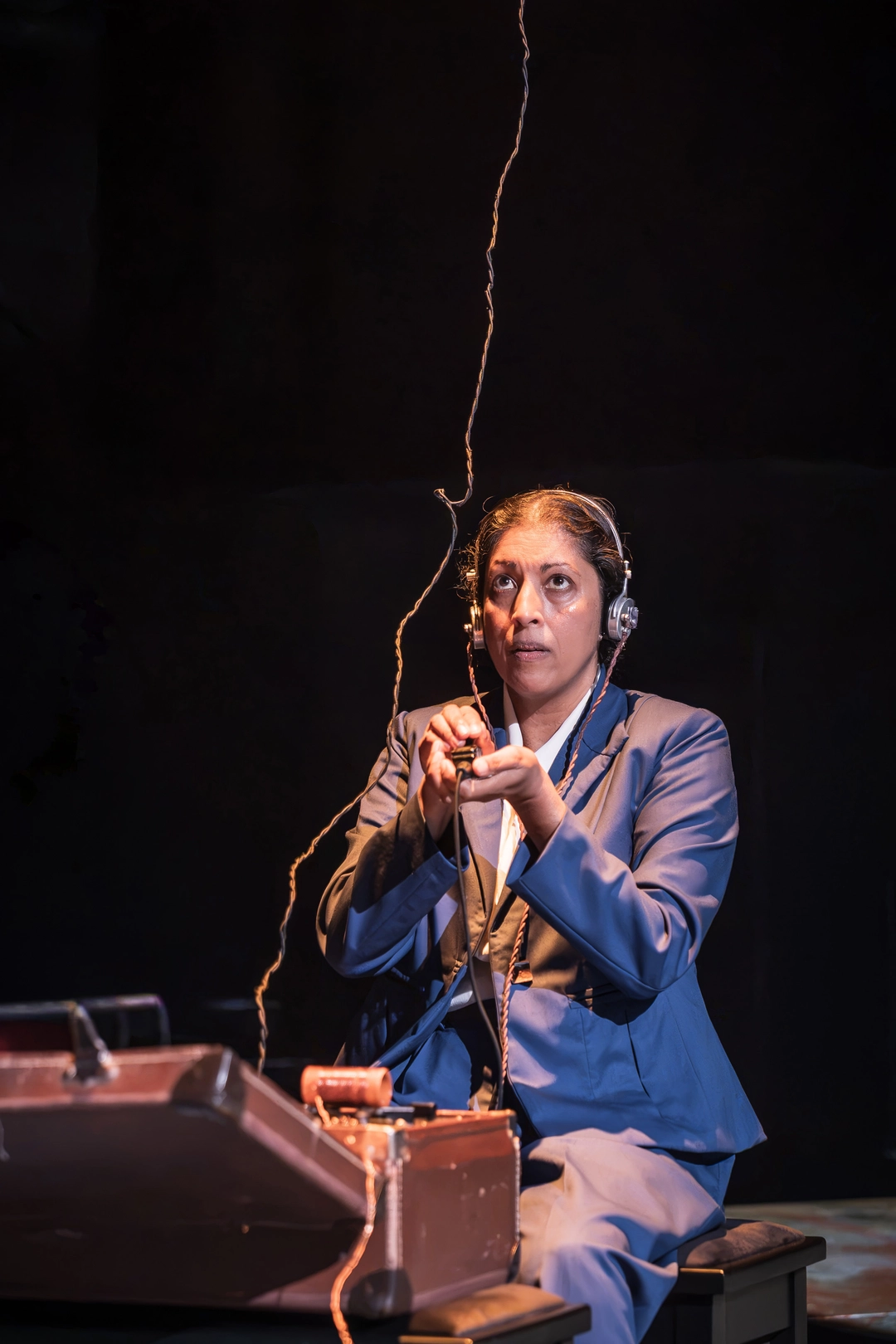
How it plays out is part of history, startlingly depicted with such reserve, no histrionics or shock tactics but with two moving versions of what finally happens, one disturbingly romanticised, one brutally harsh, both equally distressing and moving. A very fine evening of first class theatre.
Andrew Kay
The Minerva, Chichester Festival Theatre
27 August
Rating:





Leave a Reply