












THE MARRIAGE OF FIGARO
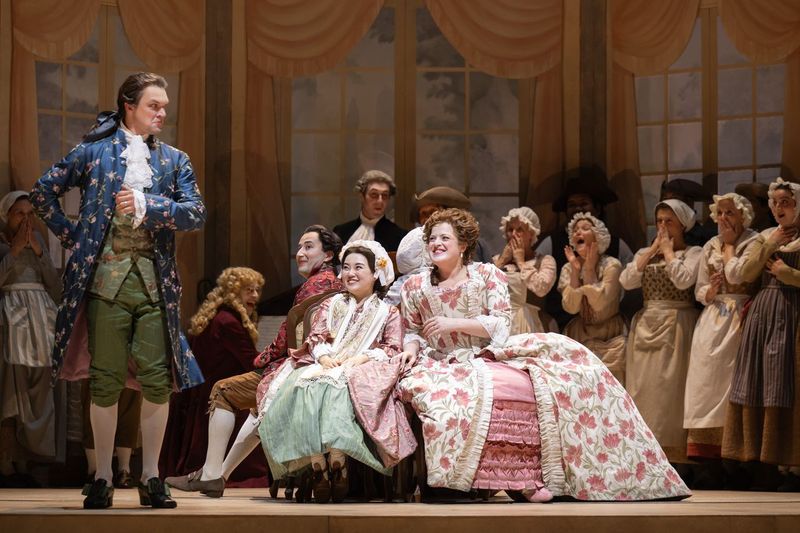
© Glyndebourne Productions Ltd. Photo: ASH
The pure delight of an un-messed-with Mozart on a sunny autumn afternoon is hard to beat and Glyndebourne’s revival is just that, a true delight. The story is based on the 1784 stage comedy by Beaumarchais but the themes are certainly timeless, the sexual exploitation of the underprivileged by the privileged, it certainly has resonance for a “me too” generation.
I come to opera with a view of the whole as a theatrical experience, and of course with a love of Mozart’s brilliant and witty music. But above all I want to see it as a whole, the sum of its parts and not dissected into components. Of course that can sometimes happen, when that whole is not cohesive, those moments when after a short while you simply close your eyes and listen to the music. Not this time!
Mariame Clément’s direction is spot on, she brings a clarity to both character and plot in what is a complex and classically farcical story. And fortunately she has in this production two great assets to work with. Firstly and to most people most importantly, a cast of fine and accomplished singers. For me though what she has here are performers who can both sing and act. That might seem like a given but over the years we have seen too many fine singers who stand stock still and windmill their arms. This company are first class when it comes to delivering both the character and indeed the comedy, and it is very funny.
Secondly she has worked with a brilliant designer, Julia Hansen’s set is truly magical, employing multiple revolves that create transformations so effortlessly and frankly quite mysteriously. I spent some time trying to fathom just how it all worked and rapidly gave up, it is a work of genius. Against this her costumes have a richness and sense of period that works so well, rich colours against the restrained tones of the set, all in perfect balance.
On now to the music, conducted with energy by Bertie Baigent but also with a gentle charm, never racing ahead, and of course The Glyndebourne Sinfonia responding with their usual talent. Jonathan Tunnell’s cello and Matthew Fletcher’s fortepiano continuo was perfectly placed throughout, present but not too present, if that makes sense.
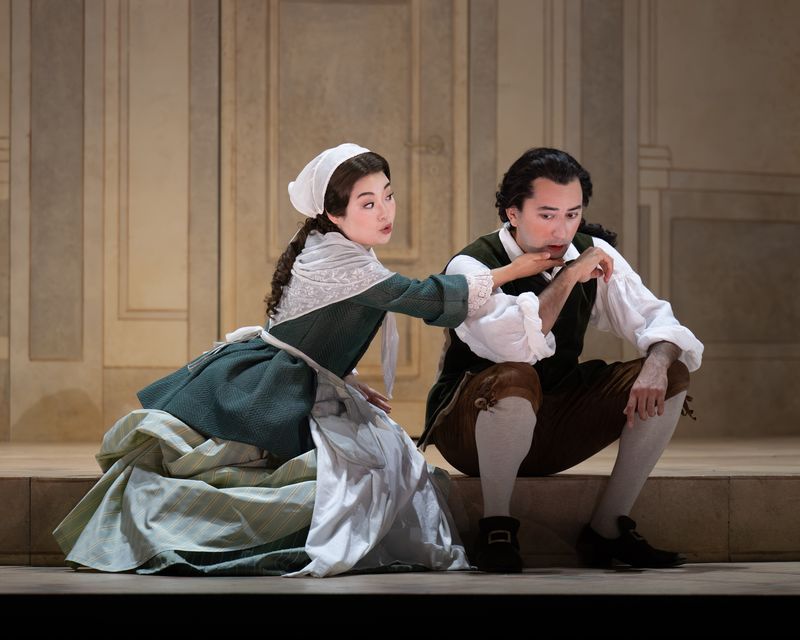
© Glyndebourne Productions Ltd. Photo: ASH
Figaro was delivered with style by bass Jasurbek Khaydarov, richly toned, cheekily delivered and powerful. That said, by the end of act II that power had faded a little, hardly surprising, and it had certainly returned in full force after the interval.
Susannah was delivered by Henna Munn in a change from the original listing and sung again with style but also with wit, there was a cheeky presence to her performance that added so much to the role.
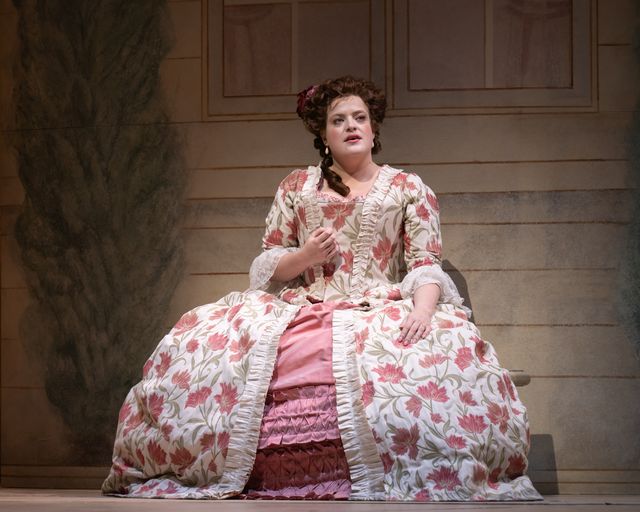
© Glyndebourne Productions Ltd. Photo: ASH
Anton Beliaev brought a truly youthful and devilish note to Count Almaviva, a wiry loping presence stalking the stage with malevolent ease as all “baddies” should, but never at the cost of some fine singing. Madeline Boreham’s Countess was magnificent, a truly splendid and richly toned voice that could fill the room, whether in full on drama or in those most tender moments, again, it’s not all about the voice but about how an accomplished singer with use it to great dramatic effect.
Not a weak moment in this entire production, the sort of opera that we have come to expect from Glyndebourne and a joy to experience.
Andrew Kay
14 October
Glyndebourne
Rating:



Leave a Reply