












THE BEE KEEPER OF ALEPPO
Photos: Manuel Harlan
Christy Lefteri’s beautiful book charting the terrifying journey of Syrian refugees Nuri and Afra from their home in Aleppo to England is a tense and moving read, and no doubt a challenge to any theatre maker. Apart from convincingly displaying the physical and emotional stresses and traumas of their exile and displacement the story travels from country to country, across land and sea, from officialdom and aid agency to exploiters and crooks.
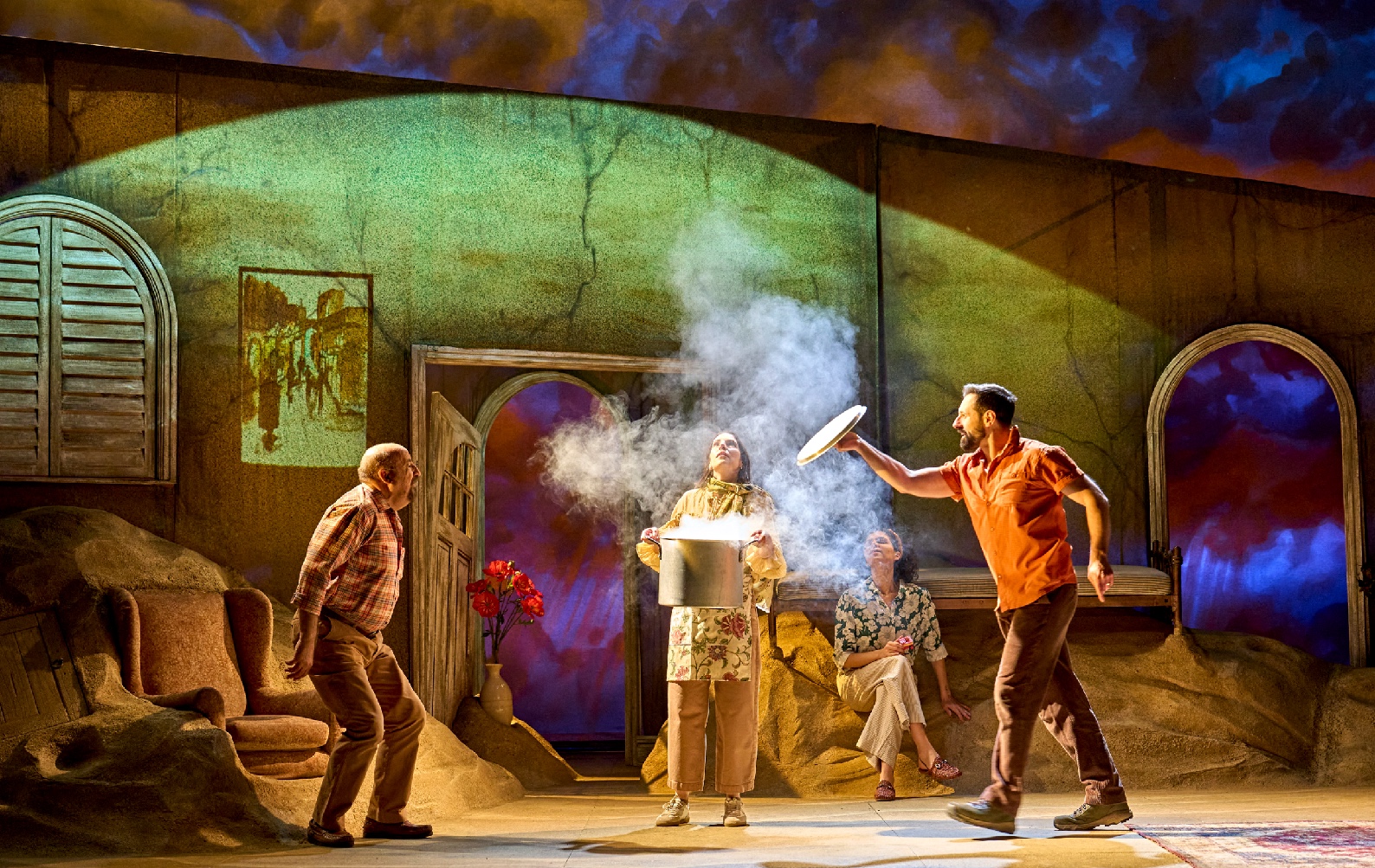
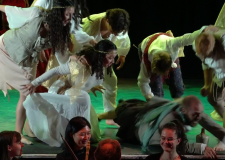
It might seem like an impossible task and yet somehow director Anthony Almeida and the original producers from Nottingham Playhouse manage to convincingly pull it off. Nesrin Alrefaai and Matthew Spangler’s adaptation has an immediacy and flow that in just a few hours and on a single set, with the aid of clever lighting and projections, takes the audience from the peaceful bee keeper’s garden in Syria, across central and western Europe to England. There, after their struggles with international bureaucracy they then encounter British bureaucracy and the legislation, and the idiocy of some of those charged with its application of the UK’s stand on political asylum. This is a heartbreaking story in so many ways and makes for a disquieting watch, not just revealing the deeply moving story of those two central figures but the lack of feeling and care displayed by those who are there and meant to be helpers.
At this time the poignancy of this, as we see a shift to the right in our own country, could not be more frightening and disturbing.
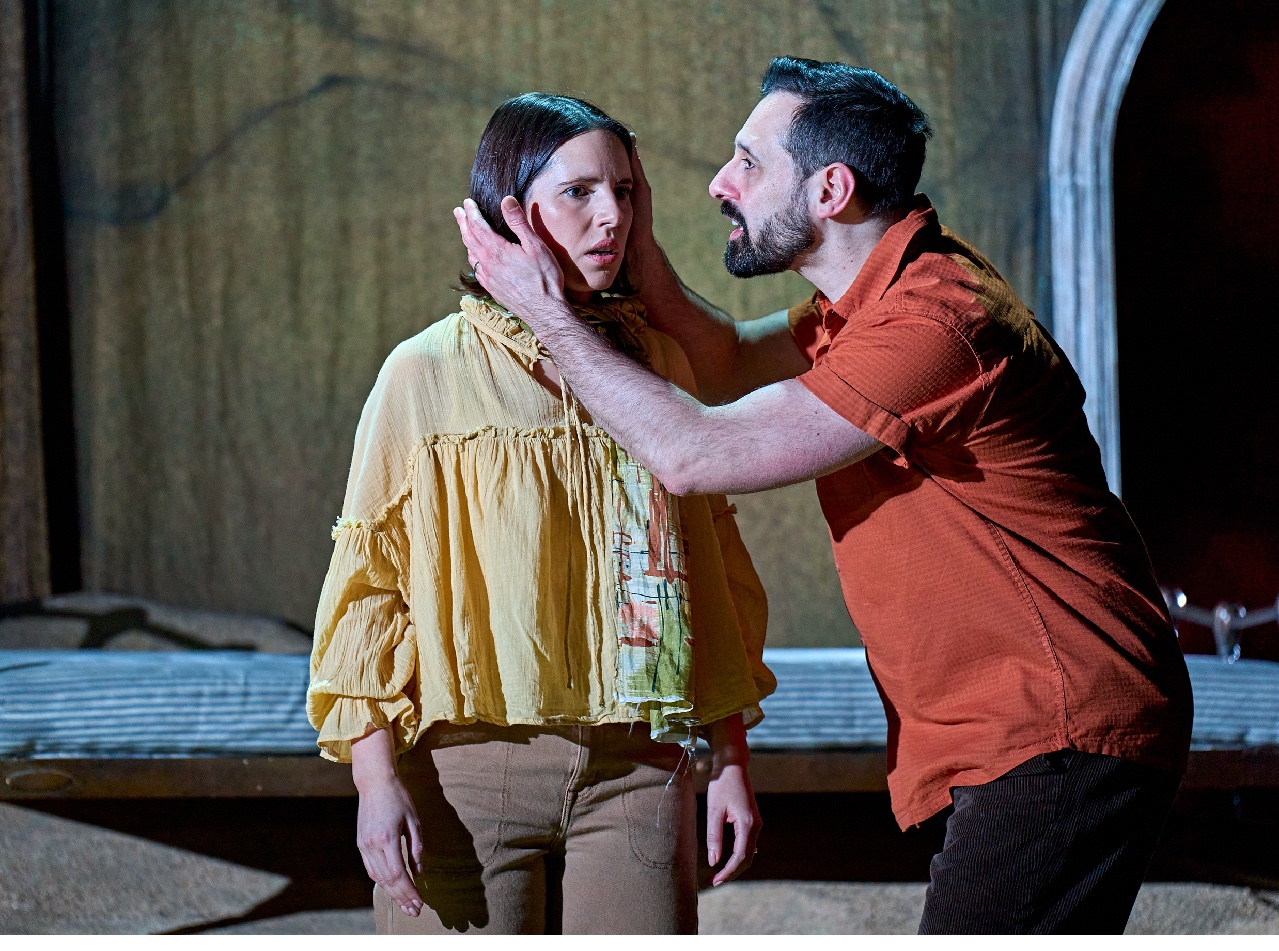
At the centre of the play are the four key players. Adam Sina plays Nuri with an initial energy and purpose that as their plight worsens becomes so convincingly desperate and angry, a very fine performance indeed, as is Farah Saffari’s depiction of Afra his wife, whose impaired vision is delicately delivered, gently staring into space and feeling her way around the stage, never once relying on crass clichés so as audience we get a true sense of her progressive decline.
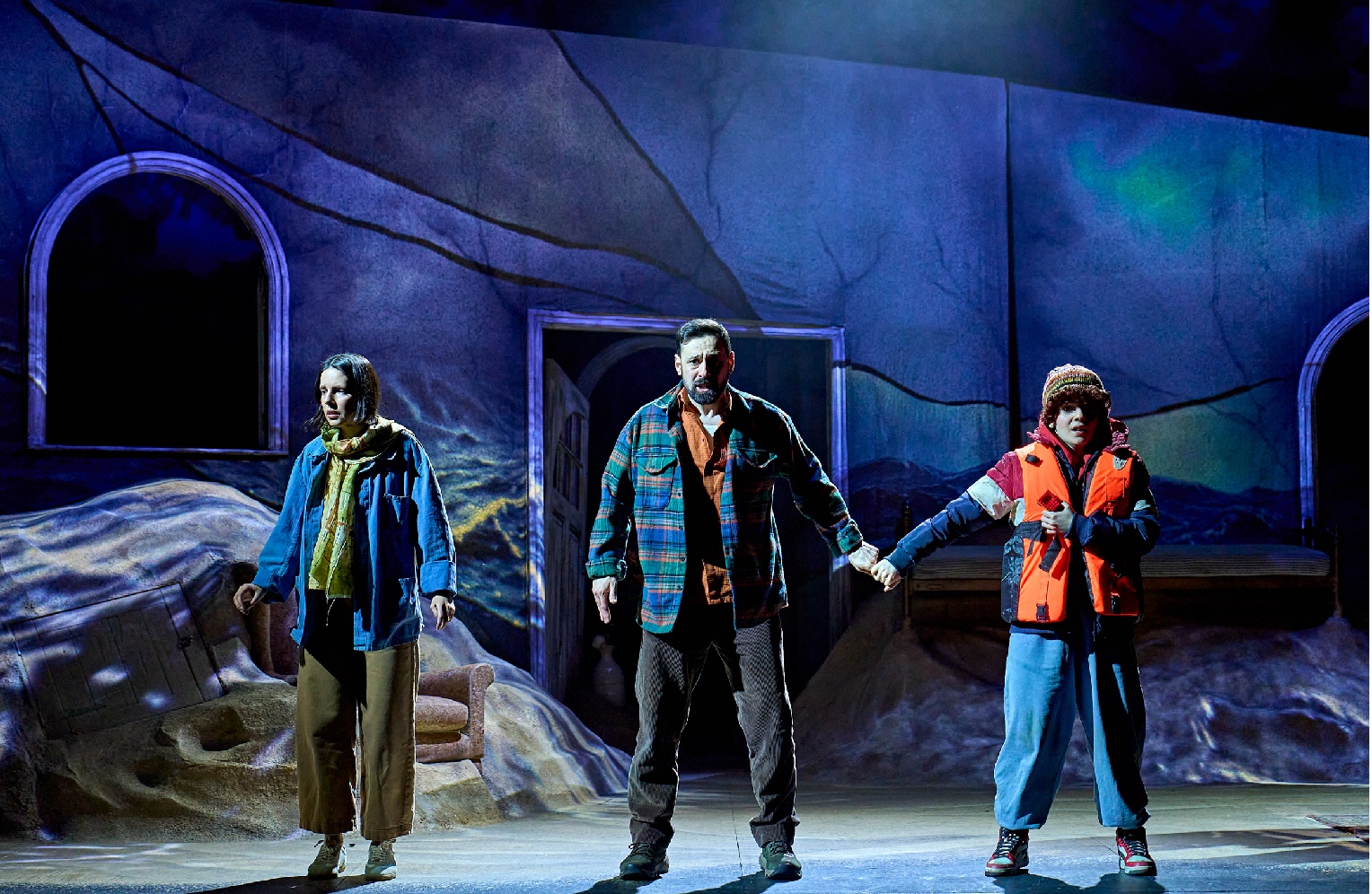
Dona Atallah’s Mohammed is a Puck-like, figure, a knowing child, wise beyond years and subtly mysterious as he drifts into and weaves around Nuri’s presence and mind. Atallah is convincingly boyish and present and at the same time wistfully not, appearing and disappearing in a way that at the end makes total sense.
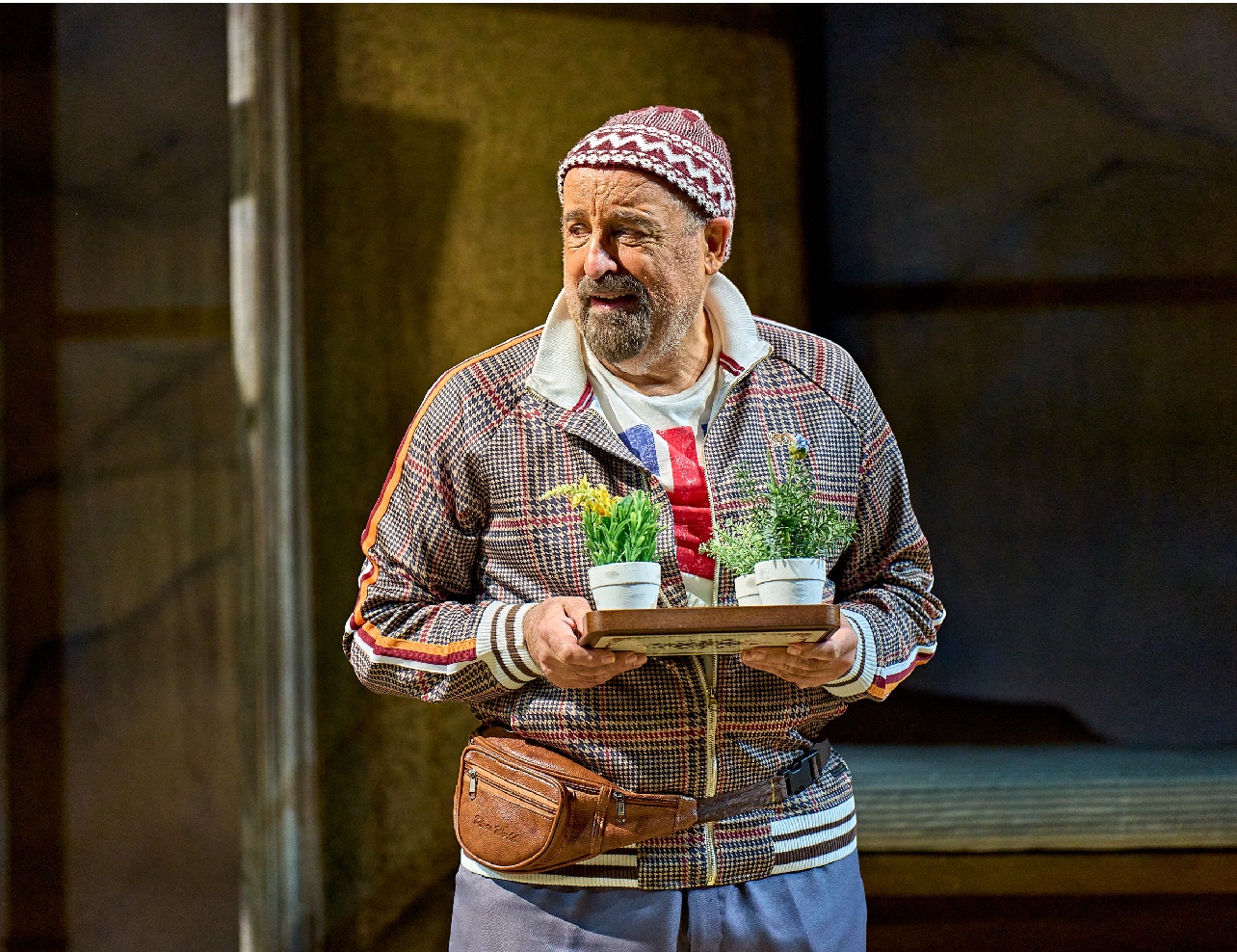
Joseph Long takes on many roles throughout, some affording the whole brief moments of humour, particularly as the “geyser” spouting Moroccan man. But it is in his portrayal of cousin Mustafa that we see his real talent as the central figure of hope, hope against all odds. He is the beekeeper and his performance is the high point of the production and the light at the end of the darkest tunnel.
There is an awful lot to get across, both physically and spiritually in just over two hours, and the rest of the company have to take on the many characters as the refugees make their journey, from kindness to exploitation, jobsworths and crooks, all done with great skill, but it does give the whole a frenetic and relentless tone. I particularly liked the bland and unconcerned portrayal of a Home Office official and the NHS worker sticking to “the rules”, all too familiar even for a UK citizen. And the same from the refugee camp workers and aiders, rules after all are rules. All this of course adds to the sense of their terrible plight but perhaps a few more moments of quiet would make this an easier watch. That said, this dramatisation has an important and deeply moving message to deliver and it does just that.
Andrew Kay
9 June
Theatre Royal Brighton
Rating:


Leave a Reply